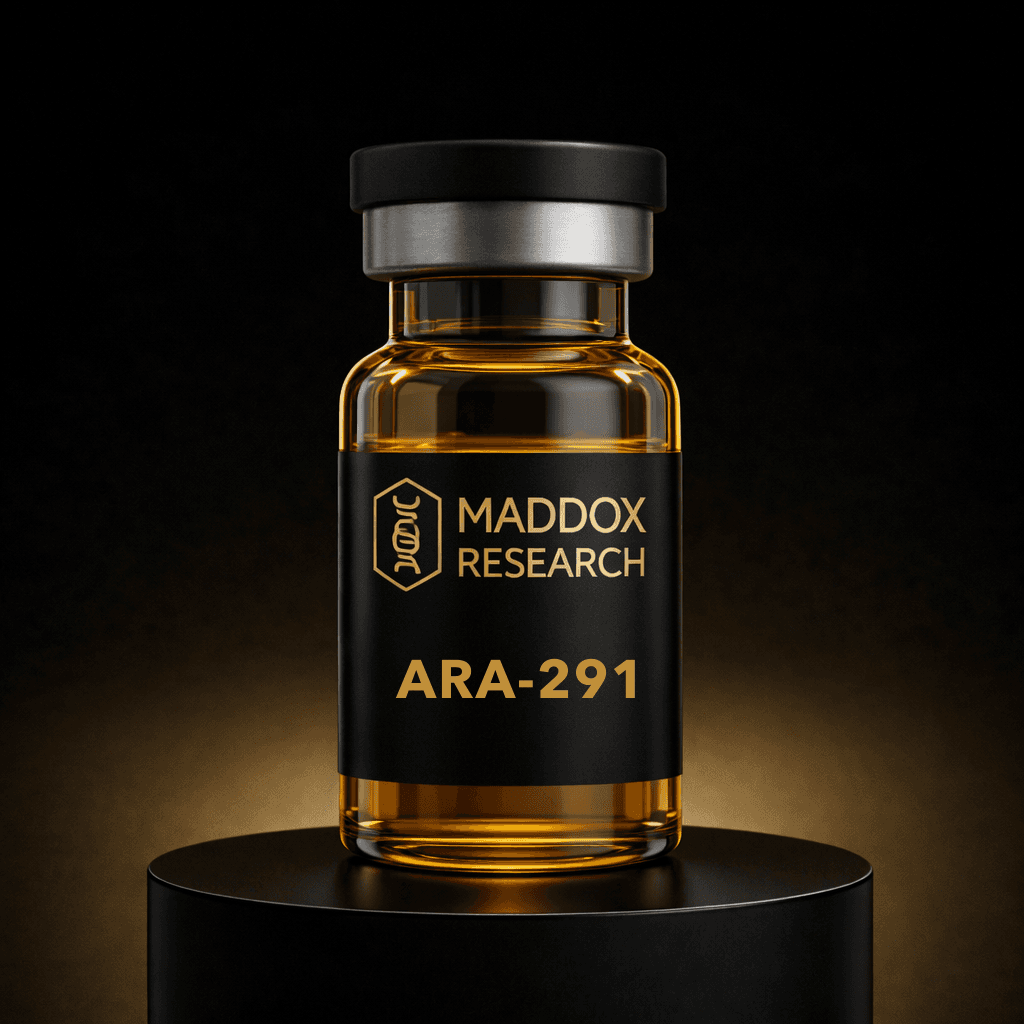
ARA-291
An erythropoietin-derived peptide studied for tissue-protective signaling.
- ✓Independently tested — COA with every order
- ✓Discreet, flat-$20 shipping · SMS + email tracking
- ✓Ships in 1–2 business days once payment clears
Overview
ARA-291, also known as ARA-290 or cibinetide, is a peptide derived from a specific region of the erythropoietin molecule. Unlike erythropoietin itself, it's designed around a tissue-protective role rather than blood-related effects, which is what makes it distinctive.
In preclinical and early clinical research, ARA-291 has been studied for how it may interact with the innate repair receptor and its role in tissue-protective and inflammatory-signaling pathways. People who follow repair and comfort research often keep an eye on this compound for those reasons.
Why ARA-291 stands out
These reflect the tissue-protective and signaling research that gives ARA-291 its reputation.
Innate repair receptor focus
Studied for its interaction with the innate repair receptor, a pathway tied to the body's protective response.
Tissue-protective research
Examined for its potential role in protecting and supporting tissue, a draw for recovery-minded people.
Inflammatory-signaling pathways
Looked at in research connected to inflammatory signaling, of interest to those focused on comfort.
Early clinical footprint
Unlike many peptides, it has moved into early clinical research, giving it a slightly deeper evidence trail.
How it works
ARA-291 is built from a region of the erythropoietin molecule, but it's oriented toward tissue protection rather than the blood-building role erythropoietin is known for. Research has focused on its interaction with the innate repair receptor, a signaling pathway linked to the body's protective and restorative responses.
That makes it a subject of tissue-protective and inflammatory-signaling research. Its evidence base is largely preclinical with some early clinical work, so while it has a slightly deeper research trail than many peptides, it's still best viewed as a research-stage compound rather than a proven treatment.
How to use
- 1
Reconstitute
Add bacteriostatic water slowly down the vial wall and let the powder dissolve. Swirl gently, never shake.
- 2
Dose
Dosing should be set with a healthcare provider based on your goals and health history — protocols are individualized and not something to self-direct.
- 3
Administer
Administration should be demonstrated and directed by a healthcare provider familiar with your protocol.
- 4
Store
Keep the reconstituted vial refrigerated and out of light. Store the unmixed vial in a cool, dry place.
Independently tested, every batch
Every lot is tested by an independent lab and ships with a certificate of analysis, so what's on the label is what's in the vial.
Safety & important considerations
- Use a fresh sterile needle and a clean injection site for every administration.
- Start at the lower end of your range and pay attention to how your body responds.
- Refrigerate the mixed vial and keep it out of light to maintain its quality.
- Speak with a qualified clinician before starting if you have a health condition or take other medications.
These statements have not been evaluated by the Food and Drug Administration. This product is not intended to diagnose, treat, cure, or prevent any disease.
Frequently asked questions
What is ARA-291?+
It's a peptide derived from a region of erythropoietin, also known as ARA-290 or cibinetide, oriented toward tissue protection rather than blood-related effects.
What is it studied for?+
Research has focused on its interaction with the innate repair receptor and its role in tissue-protective and inflammatory-signaling pathways.
How is it different from erythropoietin?+
It's built from a region of the same molecule but designed around protective signaling, not the blood-building role erythropoietin is known for.
How do people use it?+
Most reconstitute it with bacteriostatic water and administer it as a subcutaneous injection, following the protocol set by their provider.
Is the research further along than other peptides?+
It has moved into some early clinical research in addition to preclinical work, giving it a slightly deeper evidence trail, though it's still research-stage.
Is it right for me?+
It appeals to people following tissue-protective research. It's not appropriate if you're pregnant, nursing, under 18, or managing a serious condition without clinician oversight.
Ready to start?
Not sure if ARA-291 is the right fit? Take the quick quiz, or add it to your cart and check out securely.